Monday, November 24, 2014

FidEgan's FastPacks - Episode 8 - The Lycian Way - Turkish Hiking, History, and Hospitality


John and I are currently on a world trip where we plan to persue our passion of trail running through the various landscapes and environments of the world. As we pass through each country we want to post our top pick for a trail run that we did. This does not mean that this is the best trail to run in that country. It just means that it was our favorite that we did. We are both using Ultraspire Fastpacks to carry our gear, hence the name of the column.

In this case this we did this trail as a backpack. It theoretically could be done as a Fastpack but because we are currently living out of our backpacks, and it's a point to point trail, we elected to carry all of our gear and full camping equipment and take our time as we moved along the coast. It was just easier that way.
One of many incredible sunsets

Where: A hiking trail that follows the southern coast of Turkey between the cities of Fethiye and Antalya. Most people hike this trail in the spring, but fall is another popular time. Summer is too hot and during the winter the upper terrain is covered in snow.

Facilities/Trailhead: The trail ends are in the villages of Ovacik in the west and Geyikbayiri in the east which are close to the towns of Fethiye and Antalya, respectively. There are many towns and villages along the route that have bus and dolmus (minibus) service so shorter sections of the trail can be easily hiked. For the entire length of the trail with the exception of two sections in the eastern mountains there are pensions and hotels you can stay at. Sometimes this means catching a dolmus at the end of the day to get into town but you could do the majority of this trail without camping gear. However, if you have a tent and cooking gear then the variety of camping spots is vast. Water is the only limitation when it comes to camping as this region is very dry. Many of the cisterns and water sources along the trail are less than ideal. If you camp then you absolutely will want a water filter (not just water purification tablets). Camping fuel is also a difficult find. White gas or butane canisters might be able to be found in Fethiye or Antalya, but not easily. A Whisperlite International that burns gasoline would be a good choice. 
Kabak Beach pension    
Camping amongst ruins

Fees: There is no cost involved with hiking the trail itself except for at Chimaera and Guynuk in the eastern end of the trail.  There the trail passes through "park" areas that charge a few dollars for entry.  If you are going east to west there would be a charge to enter Olympos but going the other way you enter the area from the mountains were there is no entry gate.  Staying in pensions ran in the 70 to 120 Turkish Lira range per night (~$30-$55) for two people. Eating in restaurants usually cost about 15-20 Lira ($7-9) for an entree. The food in Turkey is amazing, one of many things we will miss about this country. Word of warning about this trail – the availability of ATMs along it is sparse. Have plenty of cash on hand so that you don't run out in the middle of the trail (like we did) which involves a day of riding buses for hours to get to a money source.

Terrain/Trails: The trails runs the gamut of terrain types. From goat paths, to single track trails, sandy beaches, Lycian and Roman roads that are worn smooth by 3000 years of feet and hooves on them, to dirt and paved roads. Much of the smaller trails are covered with fist size rocks that would probably make running on the terrain (for many) painful. The trails are marked by yellow signs and red/white paint hashmarks. For the most part the trail is well marked and if you go more then 200 meters without seeing a marker then you need to start looking around. Many days we would miss a marker or turn but would quickly realize it. There is some trail rerouting going on Gurses and Demre which is the only area where we really got lost. Part of our problem was that we had an old edition of the guidebook and map. Having the current edition with the latest updates probably would have solved that problem.
Sign trail markers 
Paint trail markers

Distance: The trail runs for over 500km (300+ miles) along the coast and coastal mountains of southern Turkey. The guide books describe hiking the trail over a 30 day period. We took 38 days as we would find a scenic beach or town and not want to leave. It was refreshing not to have to make a deadline as there are some incredible spots along the coast that warrant a longer stay.

Description: This trail has a huge amount of the three things we like best about Turkey – hiking, the history, and the hospitality. The hiking is gorgeous. Sometimes you are at sea level walking along the beach. At other times you are at 5000+ feet with panoramic views. Every corner we went around there was a new sight or perspective to see. The history along the trail is like nowhere else we have ever seen. Layer after layer of history going back 3000 years just lying in the bushes everywhere as we walked along, from the early Lycians who fought against Greece in the Trojan War, to Persia, Alexander the Great, Romans, Byzantine, the Crusades, the Ottoman Empire, and now theTurkish Republic. There are all types of ruins and buildings all along the trail: Lycian tombs, remnants of cities, Roman amphitheaters, baths, and aqueducts, some of the first ever Christian churches, forts built by Christian Crusaders, Ottoman era cisterns, and statues of Ataturk line the path that we hiked. It was a rare day that went by without passing some piece of history. 
Trail is a Roman aqueduct
Roman aqueduct Delikkeer
Statues of Ataturk abound  
After several earthquakes some of the ruins are now under the ocean where you can swim or kayak over them. Turkish hospitality like most Muslim hospitality we have met cannot be beat. Strangers would invite us to stop and have tea, bread, and olives with them. People would pick apples, pomegranates, and grapes and give them to us as we hiked by their homes. The Turks would also be very helpful as we moved along the trail. Many times as we left one village we were told that their friends in the adjacent village would be ready to receive us once we got there; “it is only a phone call away”, they'd say. The one warning we would offer for those considering this trail is to beware if you are allergic to bees or have a fear of snakes, or dogs. This region is known for its honey making, especially in the western part of the trail closer to Fethiye. There were thousands of bee hives that we passed so often you could hear the trees buzzing with them, and some of the water sources are overwhelmed by them. The bees seemed fairly docile, however, so as long as you don't freak out they will not bother you. John did get stung once in the ankle when one got caught between his foot and shoe but that was a freak occurrence. 
Cluster of bee hives
We saw multiple snakes. None of the ones we saw were poisonous, though they do exist here. Most were grass snakes which are harmless as was the Whip Snake we saw. However, the Whip Snake was very large (~6 feet) and moved super fast (faster then we could run) which was a little unnerving. Probably the biggest threat was all the dogs, especially the sheep dogs guarding their flocks. Many were just noisy and were scared to come close but there were a few that were downright aggressive and had to be chased off with our hiking poles. We were warned by several Turks that these dogs can be dangerous, especially at night. 
View over Olu Deniz
Canyon to Alinka
Leto Temple, Letoon
Letoon Amphitheater
Harpy Tomb, Xanthos
Amphitheater, Xanthos
Tombs with Arch of Modestus
Genoese fort, Simena              
Ucagiz Bay                             
Medusa, Myra                        
Tombs in Myra                      

If you enjoy eating excellent food, good hospitality and hiking all day through ancient history then this trail might be for you. There is a reason it was voted on the World's Ten Best Walks.


Monday, September 29, 2014

FidEgan's FastPacks (or not so fast) - Episode 7 - The GR 20, Corsica, France

John and I are currently on a world trip where we plan to persue our passion of trail running through the various landscapes and environments of the world. As we pass through each country we want to post our top pick for a trail run that we did. This does not mean that this is the best trail to run in that country. It just means that it was our favorite that we did. We are both using Ultraspire Fastpacks to carry our gear, hence the name of the column. On this trip we had our Fastpacks for the side trip we did but for the main trail full size backpacks were needed for all our camping gear.

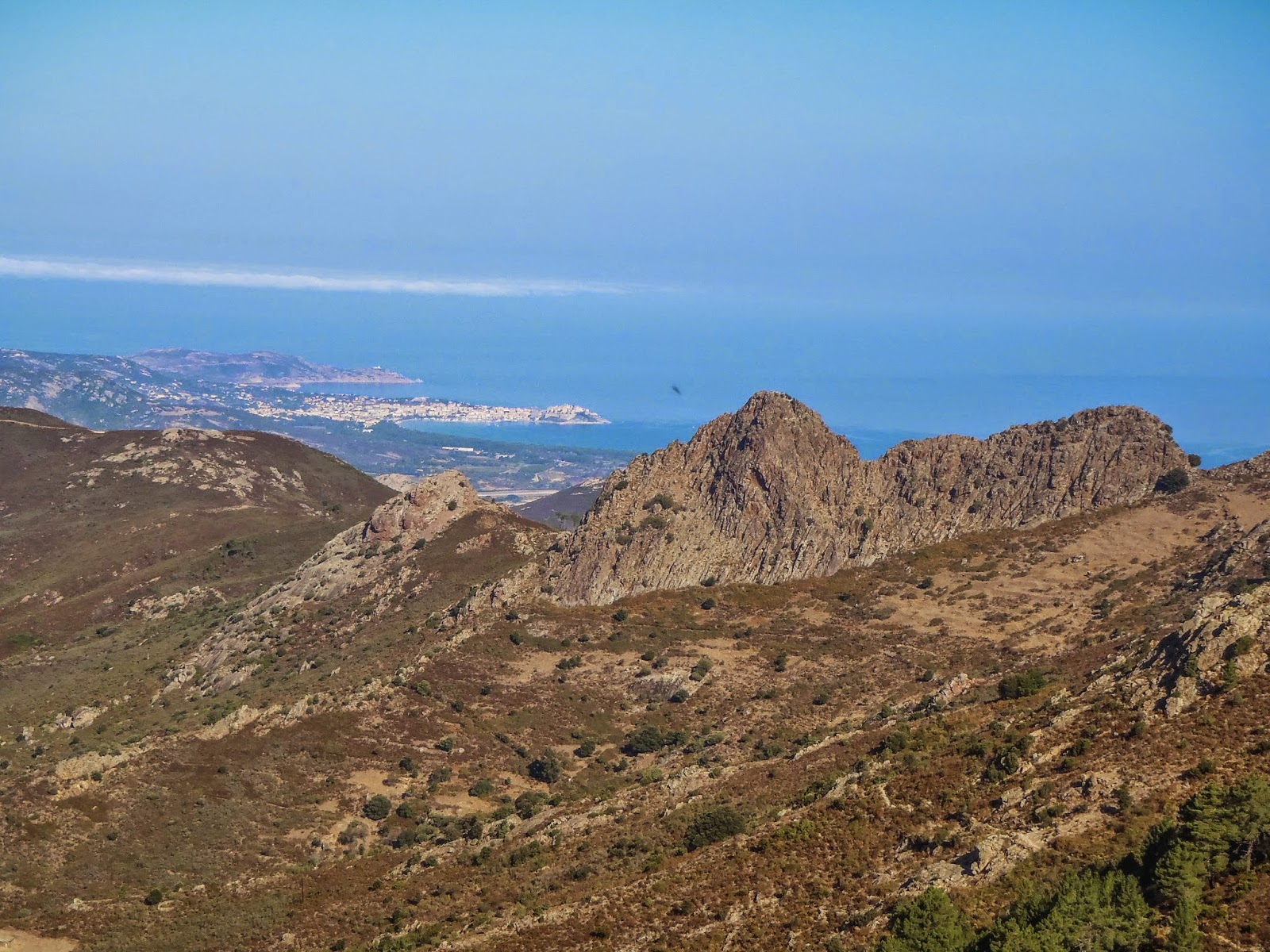
Where: The GR 20 hiking trail which traverses the island of Corsica from north (Calenzana) to south (Conca).
Map from Wikipedia
 
Facilities/Trailhead: The trail is split into a northern and southern section with the village of Vizzavona being considered the middle point. In the north the town of Calvi can be reached by train or bus. A bus or taxi will be needed for the last ~10km to get to the trailhead in Calenzana. The southern terminus in Conca can be reached from the town of Porto Vechchio by bus. Vizzavona has a train station which is the best way to get there. There are some supplies available in each of these towns but it will be cheaper (and better selection) if you stock up on any supplies you need in the larger towns. Have enough money with you. They take cash only and the nearest ATM is an hour train ride from Vizzavona in the town of Corte.

There are Refuge mountain huts where you can stay or camp. Camping is only legally allowed at the Refuges. It takes between 5 and 9 hours of hiking between the huts. During the summer months there is food served (breakfast/dinner). There are also some private Bergeries scattered around but we didn't count on them. They were bonus places to find a tasty lunch (homemade cheeses, fresh bread, salami and drinks). The huts are often full and crowded. We elected to bring a tent and stove so we could could feel independent. This caused heavier backpacks and a slower pace but decreased the worry of not having a place to stay. It is possible to make reservations beforehand, however. The Refuges also had tents that they rented. Most Refuges had a kitchen or outside gas stove that the campers could use and each had some limited supplies for sale (pasta, tuna, chocolate, biscuits, bread, soup, wine, beer, beans, etc).
Refuge Tighiettu - Stage 5
 
Fees: The huts were typically 13 Euros per person to stay in. Camping was 7 Euros per person; renting a tent was an additional 10 Euros per person. We found the meals a bit pricy for what you received. 20 Euros for dinner (soup, pasta, dessert) and 10 Euros for breakfast (typical European bread, butter, jam, tea/coffee). Two people completely relying on the huts would be spending around 83 Euros per day not including any alcohol, drinks, or snacks. It adds up so bring a big wad of cash if you are going this way. We cooked our own food and slept in our tent and spent around 40 Euros per day for everything (less alcohol would have made it a lot cheaper).
Terrain/Trails: The northern section (9 stages) is the much tougher section of the hike and involves a fair amount of scrambling. There are many spots that are steep with large exposure. Chains and handrails exist in some places but in many areas you will be using your hands to climb across the rocks. If you don't like heights then this part of the trail is not for you. The rock tends to be solid granite and makes for beautiful climbing. If you rock climb this would be a great place to have a rope and full climbing rack. Climbing lines of all levels are in every direction you look.

The southern section (6 stages) is less rocky and rugged but passes through some very pretty areas. The Plateau de Coscione is the well known part of this but there are many other scenic spots.

Most people hike the trail from north to south to get the technical parts done while they are still fresh. This is the way we went. Hiking from south to north would be better for photography as the sun will be at your back as you walk.

This is the best marked trail we have ever hiked. There are red/white paint marking and cairns. If we went more then 100 meters without seeing a marker we would instantly stop and look around since we were off course. We did not have a guide book, only a map and probably could have done it without even that (this is not recommended however!).
Trail marker
 

There are a number of side trips possible along the way. There are mountains to climb or lakes to hike to. There are also a few places where there are “variants” - usually the variant goes over a mountain while the “normal” trail goes around.
Distance: 180 km or 112 miles with about 33,000 feet of vertical change. This is considered to be one of the most difficult (and scenic) hiking trails in Europe and is listed on the National Geographic Adventure website as one of the 20 all time epic trails in the world.
Description: We chose to do the trail slowly and just hike hut to hut. There are some days where it is totally possible to do a “double” and shorten the time spent out there. The standard is 15 days. The French Foreign Legion do it as a military training exercise in 7 days. The record is an INSANE 32 hours by Guillaume Peretti.

The first day is mostly up and takes you into the rocky steep first half of the trail. If you start in the morning you will spend most of the day in the shade which is good because it can get hot in Corsica, especially lower down. Section 2, 3, and especially 4 are the most technical of the route. On section 2 with our heavy packs it took us 6 1/2 hours to go 7km. The trail consists of a lot of up and down steep scrambling with little forward progress. Day 4 is the Cirque du Solitude which is the crux of the whole trail. Here is where you find the most chains, metal ladders, and hand rails to help get through this area. Even with the artificial help you will still have a lot of exposed rock scrambling to do. Being comfortable with exposure helps in getting through this section. It would be a very bad place to fall. Section 7 has some beautiful lakes that can be climbed down to. From there to the halfway point at Vizzavona there are still some brief scrambling areas but much less. 
 
 
The southern section of the trail is more mellow. The trail goes through more forested sections but there are also large meadows, ridgelines, and fields you pass through. The Plateau du Coscione provides huge wide open vista views and easily competes with the north for beauty.
 

In both sections we saw Mouflon (wild sheep), wild boar, and foxes. Be careful about leaving food lying around. 

Mouflon sheep                


We took the side trip to the top of Monte Cinto which is the highest point in Corsica. The trailhead for this is at the end of Stage 3 (Refuge Ascu-Stagnu). There is some rock scrambling involved here and makes a great day trip. 
Summit of Monte Cinto


Tuesday, August 26, 2014

FidEgan's FastPacks - Episode 6 - Tour du Mont Blanc

John and I are currently on a world trip where we plan to persue our passion of trail running through the various landscapes and environments of the world. As we pass through different countries we want to post our top pick for a trail run that we did. This does not mean that this is the best trail to run in that country. It just means that it was our favorite that we did. We are both using Ultraspire Fastpacks to carry our gear, hence the name of the column.  

Where: The Tour du Mont Blanc – a hiking trail that circumnavigates the Mont Blanc massif mountain passing through the French, Italian and Swiss Alps.

Facilities/Trailhead: There are multiple places that you can use as trailheads. The most common places are Chamonix, Les Houches, Les Contamines in France, Courmayeur in Italy, or Champex and Martigny in Switzerland. There are other possibilities also. We started in Les Contamines where we left our car at a trailhead parking lot. We were told by the Tourism Office that car breakins were not a problem but we made sure that nothing was visible inside the car. We left our larger backpacks and valuables at one of the guesthouses in Les Houches where they would be more secure.

There is camping along the route but we chose to use the wonderful Refugios and Guesthouses or Gites. These provide overnight accomodation and can include dinner (usually a 3 course meal (appetizer, main meal, and dessert) and breakfast (standard European coffee/tea, bread, butter, jam, honey and sometimes included cereal or fruit). We chose to stay in the cheaper dormitories (dortoir) but there are private rooms available. This is a popular trail so the private rooms in the huts are usually booked ahead. Even the dorms were pretty full at some huts since we did this in August. Reservations are recommended, especially for larger groups.There were showers at every hut. Sometimes they charged extra for this (2 Euro) but most of the time it was included. Bring slippers or flip-flops as boots/shoes are not allowed inside most of the huts. 
One of many beautiful Refugios
There are multiple huts or towns along the entire route so lunch options existed every day.

Fees: There are no park fees or cost for using the trail. Staying at the huts runs about $65 per person for 1/2 pension (dormitory accomodation, dinner, breakfast). Drinks and snacks are extra. Some of the huts have heartier and bigger meals than others and vegetarian options exist (veganism is more of a challenge because of the meat and cheese culture of Europe). You may be charged about $8 to camp near some of the huts or at designated spots. Wild camping is frowned upon but we saw lots of people doing it with no consequences.

Terrain/Trails: The trails ran the full gamut from wonderful single track to dirt roads and some pavement (usually when passing through the towns/villages). On one section of trail above Argentiere there are ladders and handrails to get past the rock cliffs. The scenery is ridiculously beautiful with alpine passes, forested valleys, and the ever present Mont Blanc massif with its constant changing perspective as you work your way around these massive mountains and glaciers. The “normal” direction is to travel counter-clockwise but either direction would work fine. Hikers will often take 10 to 14 days to do the loop. We “ran” it in 7 days. The winners of the Ultra-Trail du Mont Blanc (UTMB) race cover the distance in 21 hours (that is FAST!!!). We really recommend taking your time to truly be able to stop and enjoy the beauty of this loop. Don't rush through it.

Distance: The full loop is 170 km or 105 miles and has about 33,000 feet of vertical ups and downs. The Tour du Mont Blanc does not follow the UTMB course exactly. The hiking loop is longer, has more vertical, and is more scenic. The trail is well marked with signs and symbols painted onto rocks, buildings, and trees.
Trail marker in France        
Trail marker in Italy           
Trail marker in Switzerland
Lots of trail signage            

Description: We were originally going to start in Les Houches but the weather was so bad that day we elected to drive to Les Contamines and start from there where the weather was better. This area is notorious for bad weather and Mont Blanc creates its own conditions. While it was pouring rain in Chamonix it was sunny and beautiful in Courmayeur. We were fortunate to have our friend Glenn Tachiyama fly out from the United States to join us. The trail first traveled over the double pass of Col du Bonhomme and Col de la Croix du Bonhomme. This was one of our favorite passes and was a good introduction to some of the climbing that we would have to do. Once above the trees the terrain is alpine grass that almost looks like it has been mowed. Cows with large loud cowbells graze the fields. The UTMB race was two weeks away so we had some really fast tough looking runners going by us at times as they trained. We stayed that night at Refuge des Mottets and were glad we had a reservation since it was very crowded. Just as we got to the Refuge it started to rain and that continued all night. 
Starting in the rain                                      
View from Col de la Croix du Bonhomme

The weather was still ugly at the start of the next day as we climbed Col de la Seigne which was the border into Italy. Once we started the descent into Val Veny (Veny Valley) the rain became even worse. High winds, driving rain, and cold with the rain bordering on sleet/snow. The wind was so strong it would almost knock you down. During this section as we approached the Courmayeur ski area we literally had to run for our lives. We called it the “Race Against Hypothermia”. At the Refugio Monte Blanco we were able to find shelter and some of the best hot chocolate we have ever had. It was literally like a mug of melted chocolate. Yumm! The weather improved in the afternoon as we passed through the charming but large town of Courmayeur and then climbed up the next ridge to Refuge Bertone where the clouds broke and we finally got our first good views of Mont Blanc.
The Race Against Hypothermia
The next day running along the ridge of Mont de la Saxe was wonderful compared to the day before. Panoramic views of the Mont Blanc mountain range and wonderful runnable single track. This was one of the best days of runnable single track all the way to Refuge Elena at the base of the Grand Col Ferret which is the highest point on the loop (2537 meters).
Mont Blanc massif

Crossing the Grand Col Ferret takes you into Switzerland. The price of everything jumped up even higher once across the border. This was our other day of bad weather. At the top of the pass we had 5 minutes of a view before being engulfed into a cloud and it started to snow. It was cold enough that it was starting to accumulate on the ground but we were able to descend enough that it turned to rain. This day's trail passed through another beautiful river valley called Val Ferret. The trail passes through several small villages that are so perfectly Switzerland that they almost look fake. The tidiness of Switzerland is like no other place in the world. That day ended up in the town of Champex next to a small lake. There are numerous hotel and Gite (guesthouse) options here. 
Cows on the Grand Col Ferret
 
Day 5 took us up and over the Col de la Forclaz and then to Col de Balme which was the border back into France. This route has expansive views looking north into the Martigny valley. The hike up to Col de Balme was steep with constant switchbacks. The end of the day brought us to the Refuge du Col de Balme but we elected not to stay there. It was small, dingy, had no potable water, and the lady running it was grumpy. We elected to take the chairlift/gondola combination down to the town of le Tour. Since there were no affordable hotels there we then caught the bus/train combo to the town of Vailorcine where we stayed at a nice guesthouse called the Gite Mermoud. The owner was concerned that he didn't know how to cook anything without butter or cream but he ended up being very successful at feeding Glenn a vegan dinner.
View into the Martigny Valley
Day 6 took us through the most “technical” section where the trail follows the mountainside on the north side of the Chamonix valley. There are sections of ladders, handrails, and steps driven into the rock to get past some cliffs, especially in the Echelles area where numerous climbing teams were negotiating the rock walls above us. Our lunch spot at Chalet de la Flegere had a hot tub on the porch next to the tables but none of us had the nerve to jump in. The trail then followed a rugged ridgeline across Col du Brevent and Le Brevent mountain before dropping steeply down into Les Houches. Since our backpacks were there for the first time all week we were able to have access to clean clothes.
Glenn coming up a steep section 
View from trail above Chamonix
The last day was an easy one from Les Houches over the ski area and Col de Voza to get back to Les Contamines and our car. It was nice to have an easy last day since our legs were pretty tired. The sunny weather helped our sense of accomplishment as we slowly closed out the loop. You know it was a good trip when you are glad to be done but at the same time wish it never would end. 
Mont Blanc from Les Houches ski area
 

Wednesday, July 30, 2014

The Trail tests. The Trail provides.

     How does one summarize hiking over 1200 miles in 87 days? Through every type of mountain terrain imaginable. Trails, roads, bushwhacks, rock climbs, glaciers, rappelling, river beds, glacial moraines, grassy fields, stone staircases, farmers fields, and village streets. Over 30 named passes, some as high as 20,000 feet with glaciers and sometimes waist deep snow. Through lowlands where the heat was stifling and monkeys would scamper through the trees. The variety was endless. So where the challenges. Some challenges were the same each day. Waking up at 4am. Packing up the tent while it was soaking wet from rain or dew. Walking between 10 and 15 hours (usually 12) a day with a full pack until your feet ached like they had broken bones in them. Trying to find food since we were burning 5000+ calories a day but only able to consume a fraction of that. Trying to not get lost as we followed either a maze of trails or sometimes no trail at all. Dealing with a language barrier as we were trying to find food or get directions. Suffering from the gastrointestinal distress that is inevitable when you spend so many days in Nepal in often quite dirty conditions. The trails in Nepal are covered in horse, yak, and goat poop and the flies especially in the west were very thick at times. Dealing with the bureaucracy of Nepal was a headache. Over 20 different permits were needed as we crossed the country. In some provinces (Makalu, Dolpo, and Humla) the police would not let you pass unless you had a Nepali guide with you. 6 year old Nepali children could walk the trail but experienced mountaineers like us needed a guide to show us the way. Some challenges were unique to the area we were in. 5 of the passes we crossed were technical involving ropes and harnesses where we had to rock climb, rappel, or both. They all ended up being more difficult than we expected. Each pass had a different set of problems of finding the correct route, trying to figure out where to set up rappel anchors, and how to avoid crevasses and rock fall. Both Kathleen and John took serious falls on separate passes that could have led to serious injury or death. Snowfields had to be crossed that led us to post hole into the snow as the snow was warmed by the sun. Seth even fell through a snow bridge into waist deep ice water at one point. Some rivers did not have bridges so we had to figure out how to cross them by rock hopping, using logs, or by just wading through fast moving waist deep water. Security was also a concern. Nepal is one of the poorest countries in the world so we had to watch our equipment that no one took an easy opportunity to help themselves to something. We camped next to a kitchen tent one night that was robbed at gunpoint and the equivalent of $600 was taken. Little did the robbers know that even more than that was in our tent. We also had one evening where drunken villagers decided to form a mob and chase us away from their village with sticks and rocks at 10 o'clock at night. The trail tested us every day. Sometimes multiple times in a day.

Despite the challenges, the trail provided for us, often when we needed it the most. The people of Nepal were very generous and would help us out of the blue. The Nepali loved to self appoint themselves as our guides and lead us along the trail. Sometimes they would accompany us for 2 houses until we could see where the trail went. Sometimes they would lead us for 2 days. We were taken down many shortcuts that went through peoples yards and fields that we would never have been able to find on our own. In some remote villages we were invited into peoples homes and fed dahl baht. Some where surprised when we paid them money in return. We were also invited to sleep in churches, schools, prayer rooms, and there were times we slept in abandoned buildings. Those tended to be the nights when it poured rain. The nights we camped tended to be clear (with only a few exceptions). For the most part on the trip we had good weather. The monsoon season begins in June and we knew we would be hiking until the beginning of July. There were days where we would get to a lodge at the end of the day or at a lunch spot under shelter and then it would start to pour rain. The day after we arrived in Simikot at the end of the trail it started to rain all day and night for days. This caused us to be stuck there for 5 days waiting for our flight but at least we were not hiking through it.

Throughout all the highs and lows I was fortunate to be accompanied with Kathleen and Seth. You can't go through an experience like this with the associated stress and exhaustion without tempers becoming short at times. However, at least from my perspective, I felt that we could snap at each other or disagree about something but at the end of the day I was still traveling with good friends who I wanted to share a beer with. I would not hesitate to do another adventure with this team again. They picked me up when I needed it and gave me a kick in the ass (usually the case) when I needed that, too.

As far as we know there were 8 people (including us) that did the Great Himalaya Trail this year. Remy Levin and his friend David Vanneste we met in Ghunsa at the start of the trail. Remy has many mutual friends in Washington but we never actually met him until we were in Nepal. Stuart Bilby was a Kiwi who was doing the trail the opposite direction and was by himself for most of the trip. We met him while at Last Resort dealing with a supply drop.  He was able to tell that we weren't on a “normal” trek from the large pile of gear and food we had. We also met Carmelina Maione who just fnished the trail with another guy by the name of Ray Mustey.  They were on a guided expedition through World Expeditions and were the only other group we met that had done all of the high passes also. Carmelina will be the first Canadian woman to complete the high trail. Their trip was 150+ days which is hardcore just by itself. There may have been a couple of other people that we didn't meet but it is a very small group that attempts this trail each year. This trail is still in its infancy. The concept of “The Great Himalaya Trail” was just started in 2009 by Robin Boustead but I expect that as more people hear about it and the challenge involved it will become more popular. This will be a good thing for the poor villages along the path providing a much needed source of income. We had a lot of help as we researched the trail from some people who had done the trail before us, especially Doc McKerr (the first solo trekker of the trail) and Robin Boustead (the trails inventor). A huge thanks to them. If you are looking for the hardest hike of your life then this trail is for you. Just make sure you fatten up some before you start it as you will have lost it all by the end of the trail. Happy hiking!

To see a collection of photos taken from our trip see our teams Facebook page: Great Himalaya Traverse.