For
the record we are not Iranian experts. We are interested in the
country and have done a bunch of reading, of both historical and
current events, and are also going off what Iranians told us while we
were traveling. We have tried to double check facts and be as
accurate as possible but it takes a lot of time to truly know a culture.
A
quick comment also on the politics of US-Iranian relations. There is
plenty of blame on both sides. The Iranian government is one of the
most repressive out there. Dissent is dealt with harshly. People have
been arrested, tortured, and/or disappeared over the years. John's Dad had friends in the Iranian Air Force executed by firing squad after the Revolution. Support
of the militias in Iraq during the war led to 100s of American
soldiers being killed and wounded. Many Americans are still angry about the embassy hostage crisis in 1979 and still feel that no
one ever paid for that insult. From the Iranian perspective the
British and Americans have been committing crimes against their
country for over 100 years now. In 1906 the Iranians passed a
constitution creating an electoral legislature but this government
was overthrown violently by the British and Russians in a deal to
control the countries resources which led to Iran being given only
16% of the profits from its own oil. Again in 1953, when the
democratically elected prime minister tried to nationalize Iran's oil
the government was overthrown in a joint CIA/MI6 operation. While
everyone complains about the Russians hacking of the recent election
they forget that the US has a long history of just outright
overthrowing governments it doesn't like. What we were to find in
Iran is that the people did not hold the actions of our government
against us. They realized that for both the Iranian and American
populace that the governments do things that the people do not
support. We have felt a similar sentiment in many of the other places
we have traveled to. We were told many times “You are not your
government and we are not our government.”
Our
trip was a combination of ski mountaineering and cultural tour which
made our experience wider than if we had just gone sightseeing.
However, it also made the trip more logistically challenging. The
first and maybe hardest part about going on a trip to Iran is getting
permission, especially in these times of travel bans and increasing
tension between the governments. The visa application process took
the better part of two months. We had to fill out forms with our flight
information, who we were going to meet, where we were going to stay,
and what countries we had already traveled to. We had to send a
resume where they could look at our past work experience. We think that they may have examined our online presence (Google, social media, etc). If you have
been a journalist, military, or worked for the government then your
chances of getting a visa are much lower. The paperwork initially
gets sent to the Ministry of Foreign Affairs in Tehran who then sends
you a Visa Authorization Number if you qualify. Once this number is
obtained you send your passport to the Pakistani Embassy since the US
and Iran do not have diplomatic relations. Our passports were on a
desk there when the first Trump travel ban came out. Iran decided
that with the ban that they would play the same game and not issue
any visas to Americans while the Iranians were banned. They did take
the higher road and said that they would honor the visas that had
already been issued. We beat the ban by about 2 days. Even in
“normal” times only 1000 to 1500 Americans go to Iran which
averages out to 3 or 4 Americans being in the country on any given
day. We realized that with all the political drama going on that we
might be the only Americans in the country since we were told about multiple Americans being stopped at the border
while we were there. We still are not sure how we got in. The other
hoop that Americans (and British and Canadians) have to jump through
is that they have to have a special “ABC” certified guide with
them at all times. No independent travel is allowed for these 3
nationalities. Since we wanted to climb and ski the highest mountain
in Iran (and the highest volcano in Asia) it meant that we had to
find an ABC guide who was capable of doing the mountain with us. We
had also been warned that the dates we would be there would fall
during Nowruz (Persian New Year) which meant that it would be very
busy and many of the hotels would be booked up. We emailed 5
different tour companies and went with Iran Doostan Tours who told us
that it would not be a problem for them to arrange this. They were
not the cheapest company (or the most expensive) but they were always
very prompt with their email replies, confident that they could make
all the pieces of our trip work including getting the visas, and had
the most detailed itinerary of any of the companies we contacted.
We were very pleased with them as our trip went flawlessly.
Before
we left we had declared that we really would not believe that this
trip was happening until we cleared customs in Tehran. We nervously
stood in the line for foreigners and presented our passports when it
was our turn. There was an extra form that the customs official had
to fill out and he needed help figuring out what information was
needed. We were taken to a side desk to fill this out. One of the
questions that needed answered was what hotel we were staying at.
Without Wi-Fi we could not pull up that email so we were not able to
answer that question. We were also supposed to be fingerprinted which
is a tit for tat rule because the American government makes Iranians
be fingerprinted. The customs guys were really friendly and seemed to
want to just talk and practice their English. We were asked if we
were married, asked about our families, and as many places in the
world we have traveled seemed disappointed that we did not have
children. “It is not too late, it is not too late” we were told.
After chatting for 10 minutes they decided that they couldn't find
the ink to fingerprint us and did not need the other information. We
were stamped and waved through with a hearty “Welcome to Iran”. A
good first impression.
On
the other side of baggage claim we met our first guide. “Mountain
Amir” turned out to be one of the top Iranian rock climbers in the
country with several difficult big wall first ascents to his credit.
 'Mountain' Amir
His English wasn't great but was good enough to understand each other, especially when he used the Google translate feature on his phone when difficult words came up. We spent the first 2 days skiing Dizin which is the biggest ski resort in Iran. Americans have been surprised to learn that Iran has over 20 ski areas, though most are tiny. We had talked about also skiing Shemshak but were told that the lift there was broken. Iran has not been able to import any new lifts since the Revolution in 1979. The gondolas at Dizin were the tiniest ones we had ever been in. They open and closed like a clamshell and though never tested, we were not sure they fully closed. The first time we got on we discovered something about skiing in the 70s. Back then skis were narrow. John's skis wouldn't fit in the rack at all and Kathleen had to put her skis in separate slots. John had to take his in the gondola and they would stick out the roof. The first time we got on a chairlift we also were reminded that there was no such thing as a detachable chairlift back then. John learned the hard way when the chair came crashing into the back of his calf at full speed causing a wicked charley horse. Once we figured out the lifts we had a great time skiing. There was fresh snow and unlike any of the resorts in the US that get skied out within hours there was fresh tracks to be had all day. The base of the mountain is at 9000' with the top of the lifts being around 12,000'. It was a good place to start acclimating for Damavand.
 'Mountain' Amir
His English wasn't great but was good enough to understand each other, especially when he used the Google translate feature on his phone when difficult words came up. We spent the first 2 days skiing Dizin which is the biggest ski resort in Iran. Americans have been surprised to learn that Iran has over 20 ski areas, though most are tiny. We had talked about also skiing Shemshak but were told that the lift there was broken. Iran has not been able to import any new lifts since the Revolution in 1979. The gondolas at Dizin were the tiniest ones we had ever been in. They open and closed like a clamshell and though never tested, we were not sure they fully closed. The first time we got on we discovered something about skiing in the 70s. Back then skis were narrow. John's skis wouldn't fit in the rack at all and Kathleen had to put her skis in separate slots. John had to take his in the gondola and they would stick out the roof. The first time we got on a chairlift we also were reminded that there was no such thing as a detachable chairlift back then. John learned the hard way when the chair came crashing into the back of his calf at full speed causing a wicked charley horse. Once we figured out the lifts we had a great time skiing. There was fresh snow and unlike any of the resorts in the US that get skied out within hours there was fresh tracks to be had all day. The base of the mountain is at 9000' with the top of the lifts being around 12,000'. It was a good place to start acclimating for Damavand.
 Dizin Ski Area
  View from top of Dizin
To
get to Damavand we took the scenic route on the north side of the
Alborz Mountains so that we could drive through the forests there and
stick our toes into the Caspian Sea.
 Stormy Caspian Sea
Damavand holds a special place in the hearts and mythology of the region. In the Zoastorian religion (the pre-Islamic religion) there was a 3-headed dragon chained within the mountain. In later legends the monster was changed to an evil Arab tyrant named Zahhak who was locked in the mountain after being defeated. It is not a technical mountain but the weather there can be fierce and we were told on a bad year up to 20 people have died. We had 4 days to attempt the mountain. 2 to get up, 1 to get down, with an extra day in case of bad weather.
 First glimpse of Damavand from Dizin
 Stormy Caspian Sea
 Damavand holds a special place in the hearts and mythology of the region. In the Zoastorian religion (the pre-Islamic religion) there was a 3-headed dragon chained within the mountain. In later legends the monster was changed to an evil Arab tyrant named Zahhak who was locked in the mountain after being defeated. It is not a technical mountain but the weather there can be fierce and we were told on a bad year up to 20 people have died. We had 4 days to attempt the mountain. 2 to get up, 1 to get down, with an extra day in case of bad weather.
 First glimpse of Damavand from Dizin
The
weather was the nicest on our first day though the upper mountain was
covered by a lenticular cloud which signified high winds. The sun was
shining on the lower mountain but as we climbed higher we moved up
into the lenticular cloud and the wind became pretty fierce.
 Initial hike from road
Halfway up to the shelter at 14,000' we passed the Saheb al Zaman Mosque. Having a gold domed mosque appear out of the mist and blowing snow on the side of a big mountain was a unique sight.
 Saheb al Zaman Mosque
 Skinning around 12,000'
The first couple of days there was no one around besides a couple of Frenchmen and 2 Spaniards so we were able to hang out in the kitchen with the other guides and the two Afghani caretakers. It was -7C in the hut but the kitchen was warm if you didn't mind a little bit of gas fumes. The caretakers where part of a large Afghani refuge population in Iran that does a lot of the jobs that no one else would do. These guys worked 14 days on, 1 day off and had a 2 year contract to be there. It was while hanging out around the heater in the kitchen that the Afghanis told us that things were better in their country when the Americans were there and that they wished we would come back. In that same conversation we had the Iranians tell us that the same thing applied to Iraq. We never expected an Iranian to tell us that things were better when the American military was on their border. We spent the next 2 days making attempts at the summit. The first attempt was our best shot. We made it to just above 15,000' when the snow conditions became much icier and the wind picked up. Going any further would have been dangerous so we turned around there. No one else got that high while we were up there except for the 2 French who got about 500' higher and an intense Iranian who soloed up the ridge in crampons (everyone else was on skis) and summited. He was the only one to get to the top over a 3 week period. The second day had even crazier wind so we just skied runs above the hut in whiteout ground blizzard conditions. This was all the time we had so on the 4th day we had to ski down. This ended up being an excellent run. The storm had left 6 inches of fresh snow so we were able to ski from the hut all the way back to the road with only a few 100 meter sections where we took skis off to get across rocks. While not summiting was a disappointment we had a great time skiing and meeting people. Sporty mountain people are the same inside no matter what country they are from.
 Sunrise over the Alborz Mountains
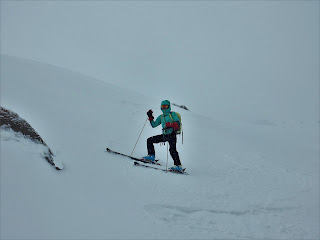 Skiing runs on Damavand
 Descending from Bargah Shelter
 Initial hike from road
 Halfway up to the shelter at 14,000' we passed the Saheb al Zaman Mosque. Having a gold domed mosque appear out of the mist and blowing snow on the side of a big mountain was a unique sight.
 Saheb al Zaman Mosque
There was a shack next
to it that provided some shelter from the wind so that we could eat
lunch. From there up to the Bargah Shelter the conditions became
worse and worse. At the very end we were starting to get cold and it
was going to be dark soon. According to John's altimeter we were a few
hundred feet above where the shelter was reported and started to
wonder if we had overshot but Amir knew exactly where we were going
and led us straight to the shelter.
 Skinning around 12,000'
 The first couple of days there was no one around besides a couple of Frenchmen and 2 Spaniards so we were able to hang out in the kitchen with the other guides and the two Afghani caretakers. It was -7C in the hut but the kitchen was warm if you didn't mind a little bit of gas fumes. The caretakers where part of a large Afghani refuge population in Iran that does a lot of the jobs that no one else would do. These guys worked 14 days on, 1 day off and had a 2 year contract to be there. It was while hanging out around the heater in the kitchen that the Afghanis told us that things were better in their country when the Americans were there and that they wished we would come back. In that same conversation we had the Iranians tell us that the same thing applied to Iraq. We never expected an Iranian to tell us that things were better when the American military was on their border. We spent the next 2 days making attempts at the summit. The first attempt was our best shot. We made it to just above 15,000' when the snow conditions became much icier and the wind picked up. Going any further would have been dangerous so we turned around there. No one else got that high while we were up there except for the 2 French who got about 500' higher and an intense Iranian who soloed up the ridge in crampons (everyone else was on skis) and summited. He was the only one to get to the top over a 3 week period. The second day had even crazier wind so we just skied runs above the hut in whiteout ground blizzard conditions. This was all the time we had so on the 4th day we had to ski down. This ended up being an excellent run. The storm had left 6 inches of fresh snow so we were able to ski from the hut all the way back to the road with only a few 100 meter sections where we took skis off to get across rocks. While not summiting was a disappointment we had a great time skiing and meeting people. Sporty mountain people are the same inside no matter what country they are from.
 Sunrise over the Alborz Mountains
  Skiing runs on Damavand
  Descending from Bargah Shelter
The
second week was our cultural tour. We thought it was going to be
about seeing the sights and history of Iran. It ended up being all
about the people of Iran. There are a ton of places and things to
see. It really would take a month to do the country justice so we had
to pick out some of the highlights. We ended up visiting Shiraz,
Persepolis, Isfahan, Abyaneh, the desert around Matinabad, Kashan,
Qom, and Tehran. We initially flew from Tehran to Shiraz where we met
our guide, also named Amir.
 'Cultural' Amir (and friends)
 Alborz Mountains on edge of Tehran
Before the flight left Tehran the flight crew found out there were Americans aboard and came back to introduce themselves. They hoped that we were finding that the perception and reality of Iran were not the same and asked if we would like to have our seats upgraded. We were enjoying the conversation we were having with a women next to us and since the flight was only an hour we were fine where we were. The woman was a tour guide for a group of French and someday hoped to get her ABC certification. When we asked her where she had learned such good English she replied “From watching episodes of 'Friends' and 'How I Met Your Mother'.” It turns out that despite being banned there are 10 million satellite dishes reaching 70% of households in the country. A lot of Iranians watch Western TV so they know what the West thinks of them and are well informed on what is going on in the world. 'Cultural Amir' spoke excellent English and turned out to be somewhat of an Iranian Renaissance man. He knew a lot about all sorts of topics. He was well versed in the history and places we were going to see but he also knew a lot about technology, cars, politics, poetry, and many other topics that came up. There is a Persian proverb for just about every situation and he would recite them to us all the time and then explain what they meant. He reminded us of Kathleen's dad in many ways. It was awesome having a translator since many people would approach us with questions. Many Iranians spoke English but it was helpful to talk to those that did not or only spoke limited English. Tourists are a rare sight and many people have never had the chance to talk to an American. We would be approached by 30 to 40 people a day wondering where we were from. Over the course of the two weeks we were there we talked to over 500 Iranians and had 100% positive interactions. All of them were friendly and welcoming us with their hand over their hearts and a short bow. This even included all the “men with beards” we talked to which was the Iranian term for religious people. There were several men who could not shake Kathleen's hand since they could not touch a woman but they also were welcoming to her. While exploring the mosques, bazaars, ancient archeological sites, restaurants, and streets of the different cities it was the interactions with the people that stand out the most. There was a young girl that approached Kathleen in the bazaar and wanted to become Instagram friends. There was several times when there would be a long line for the bathroom (since it was Nowruz) and the woman would literally pull and push Kathleen to the front of the line. A flute salesman in the Kashan bazaar rummaged through his sheet music to find the way to play “The Star Spangled Banner” and then since he had never played it before wanted our contact information so that he could practice and send us a video once he could play it better.
 Kashan Flute Player
Also in Kashan while exploring the Fin Gardens we were approached by a radio station that was broadcasting from there that wanted to interview the American tourists. We were asked how we were finding Iran, what foods had we tried, what sites had we seen in Kashan and what did we think of the city, and did we know any words in Farsi. While being interviewed there were another 50 people videotaping us on their cell phones. There was another time when a man pretended to interview John with an imaginary microphone while his wife videotaped it. Nowruz meant that all the Iranians were traveling to see their own country so we were able to meet people from every corner of the nation, not just the tourist cities we were in. Nowruz also meant that there was a lot of other stuff going on that wouldn't have been otherwise. We were able to see multiple traditional bands, a dance troupe, a puppet show, and comedian acts.
 Traditional Iranian music
 Traditional Iranian dance troupe
 Nowruz puppet show
 Reenactor from Qajar Dynasty
Despite being warned not to travel at that time it actually ended up being a great time to travel though the tourist sites were full of people. It was rare that we would see another Westerner. Foreign tourism has only been going on for the last 5 years. Currently about 5 million tourists go there a year and the Iranian government's goal is to increase that to 20 million by 2025. By comparison, 80 million tourists visit Turkey a year.
 Nasir-al-Molk (Pink) Mosque - Shiraz
 Inside of Nasir-al Molk (Pink) Mosque
 Arg-e Karin Khan Zand Citadel -Shiraz
 Ali ibn Hamzeh Shrine
 Maydan-e Imam Square - Isfahan
 Masjed-e Imam Mosque - Isfahan
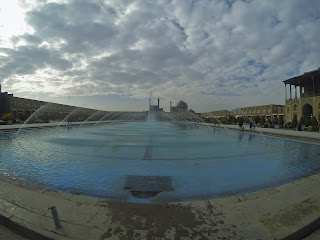 Maydan-e Imam Square - Isfahan
 Masjed-e Imam Mosque - Isfahan
 Abyaneh - inhabited for 2500 years
 Old citadel above Abyaneh
 Masoumeh Holy Shrine - Qom
 Masoumeh Holy Shrine - where Ayatollah Khomeini got his start
 'Cultural' Amir (and friends)
  Alborz Mountains on edge of Tehran
Before the flight left Tehran the flight crew found out there were Americans aboard and came back to introduce themselves. They hoped that we were finding that the perception and reality of Iran were not the same and asked if we would like to have our seats upgraded. We were enjoying the conversation we were having with a women next to us and since the flight was only an hour we were fine where we were. The woman was a tour guide for a group of French and someday hoped to get her ABC certification. When we asked her where she had learned such good English she replied “From watching episodes of 'Friends' and 'How I Met Your Mother'.” It turns out that despite being banned there are 10 million satellite dishes reaching 70% of households in the country. A lot of Iranians watch Western TV so they know what the West thinks of them and are well informed on what is going on in the world. 'Cultural Amir' spoke excellent English and turned out to be somewhat of an Iranian Renaissance man. He knew a lot about all sorts of topics. He was well versed in the history and places we were going to see but he also knew a lot about technology, cars, politics, poetry, and many other topics that came up. There is a Persian proverb for just about every situation and he would recite them to us all the time and then explain what they meant. He reminded us of Kathleen's dad in many ways. It was awesome having a translator since many people would approach us with questions. Many Iranians spoke English but it was helpful to talk to those that did not or only spoke limited English. Tourists are a rare sight and many people have never had the chance to talk to an American. We would be approached by 30 to 40 people a day wondering where we were from. Over the course of the two weeks we were there we talked to over 500 Iranians and had 100% positive interactions. All of them were friendly and welcoming us with their hand over their hearts and a short bow. This even included all the “men with beards” we talked to which was the Iranian term for religious people. There were several men who could not shake Kathleen's hand since they could not touch a woman but they also were welcoming to her. While exploring the mosques, bazaars, ancient archeological sites, restaurants, and streets of the different cities it was the interactions with the people that stand out the most. There was a young girl that approached Kathleen in the bazaar and wanted to become Instagram friends. There was several times when there would be a long line for the bathroom (since it was Nowruz) and the woman would literally pull and push Kathleen to the front of the line. A flute salesman in the Kashan bazaar rummaged through his sheet music to find the way to play “The Star Spangled Banner” and then since he had never played it before wanted our contact information so that he could practice and send us a video once he could play it better.
 Kashan Flute Player
 Also in Kashan while exploring the Fin Gardens we were approached by a radio station that was broadcasting from there that wanted to interview the American tourists. We were asked how we were finding Iran, what foods had we tried, what sites had we seen in Kashan and what did we think of the city, and did we know any words in Farsi. While being interviewed there were another 50 people videotaping us on their cell phones. There was another time when a man pretended to interview John with an imaginary microphone while his wife videotaped it. Nowruz meant that all the Iranians were traveling to see their own country so we were able to meet people from every corner of the nation, not just the tourist cities we were in. Nowruz also meant that there was a lot of other stuff going on that wouldn't have been otherwise. We were able to see multiple traditional bands, a dance troupe, a puppet show, and comedian acts.
 Traditional Iranian music
  Traditional Iranian dance troupe
  Nowruz puppet show
  Reenactor from Qajar Dynasty
 Despite being warned not to travel at that time it actually ended up being a great time to travel though the tourist sites were full of people. It was rare that we would see another Westerner. Foreign tourism has only been going on for the last 5 years. Currently about 5 million tourists go there a year and the Iranian government's goal is to increase that to 20 million by 2025. By comparison, 80 million tourists visit Turkey a year.
 Nasir-al-Molk (Pink) Mosque - Shiraz
  Inside of Nasir-al Molk (Pink) Mosque
  Arg-e Karin Khan Zand Citadel -Shiraz
  Ali ibn Hamzeh Shrine
  Maydan-e Imam Square - Isfahan
  Masjed-e Imam Mosque - Isfahan
  Maydan-e Imam Square - Isfahan
  Masjed-e Imam Mosque - Isfahan
  Abyaneh - inhabited for 2500 years
  Old citadel above Abyaneh
  Masoumeh Holy Shrine - Qom
  Masoumeh Holy Shrine - where Ayatollah Khomeini got his start
Iran felt very safe
to us. It is a police state and crime is dealt with very harshly. The
biggest crime problem in Iran is the transit of drugs from
Afghanistan on the way to Europe. Iran is still sanctioned from
international banking so credit cards and ATMs do not work there.
Travelers have to bring cash to cover their expenses so
pickpocketing/bag snatching is the biggest risk but even that seemed
unlikely. The most dangerous part of Iran is without a doubt the
roads. The country is like a giant game of chicken. Whoever can get
the nose of their car in front of the other is the winner. Lanes and
traffic lights mean nothing and we often wondered why they even
bother wasting the paint on the road. This leads to over 20,000
traffic deaths a year though recently there have been speed cameras
placed everywhere which has helped lower the death toll. When
crossing the street it is recommended to cross at the same time as a
local and let them be on the upstream side of the cars. Even
following that recommendation we still felt like shouting “I'm
alive!” when we reached the other side.
 Speed camera warning
 Typical traffic scene
We met no anti-American sentiment. In fact we were told that recently to get people to protest against America the government has to make its workers go out and protest to keep their jobs. This year during the anniversary of the Revolution there was a large amount of push back. This was right after the travel ban. The Iranians had seen on TV that there were millions of Americans protesting against the travel ban and felt that chanting “Death to America” was rude to all the people that were supporting them.
 The typical sentiment we found
 Speed camera warning
  Typical traffic scene
 We met no anti-American sentiment. In fact we were told that recently to get people to protest against America the government has to make its workers go out and protest to keep their jobs. This year during the anniversary of the Revolution there was a large amount of push back. This was right after the travel ban. The Iranians had seen on TV that there were millions of Americans protesting against the travel ban and felt that chanting “Death to America” was rude to all the people that were supporting them.
 The typical sentiment we found
The
landscape is diverse and breath taking at times. The food (it felt
like a cross between Turkish and Indian to us) was delicious and
healthy.
 Vakil Bazaar - Shiraz
 Vakil Bazaar - Shiraz
 Spices in Vakil Bazaar - Shiraz
 More choices in Kashan Bazaar
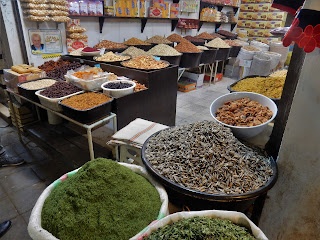 Kashan Bazaar
 Copper shop - Kashan Bazar
The pre-history period there goes back to 7000 BCE and the written history goes back to 3000 BCE. It is one of the original civilizations so the layers of history up to the present are mind boggling.
 Persepolis - Gate of All Lands
 Persepolis - 515 BCE to 330 BCE
 Persepolis - Persian lion conquers all
It is culturally diverse with many people being surprised that Christians and Jews are protected by their Constitution and guaranteed seats in the Parliament. It is a modern and sophisticated society.
 All Saviors (Vank) Cathedral
Charity is a big part of their culture. All over the country (even in remote places on the side of the road) one sees metal charity boxes where people contribute money for orphans and the poor. It made us shake our head knowing that in the US many of those boxes would have been busted open and robbed.
 Charity Box
The landscape, food, history, and culture were all fascinating but it was hands down the one on one interaction with the people that made this trip so special. The first few days we were nervous about saying we were American but by the end of the trip we were proud to admit it. People went out of their way to be nice to us and to show that the true Iran had nothing to do with the hyperbole that is seen on TV. Their greatest wish was that we would come back to the USA and tell people what it is really like there. If you are able to go we highly recommend seeing Iran for yourself. It truly is one of the most special places we have ever traveled to.
 Who doesn't love baby camels?
 Vakil Bazaar - Shiraz
  Vakil Bazaar - Shiraz
  Spices in Vakil Bazaar - Shiraz
  More choices in Kashan Bazaar
  Kashan Bazaar
  Copper shop - Kashan Bazar
 The pre-history period there goes back to 7000 BCE and the written history goes back to 3000 BCE. It is one of the original civilizations so the layers of history up to the present are mind boggling.
 Persepolis - Gate of All Lands
  Persepolis - 515 BCE to 330 BCE
  Persepolis - Persian lion conquers all
It is culturally diverse with many people being surprised that Christians and Jews are protected by their Constitution and guaranteed seats in the Parliament. It is a modern and sophisticated society.
 All Saviors (Vank) Cathedral
 Charity is a big part of their culture. All over the country (even in remote places on the side of the road) one sees metal charity boxes where people contribute money for orphans and the poor. It made us shake our head knowing that in the US many of those boxes would have been busted open and robbed.
 Charity Box
 The landscape, food, history, and culture were all fascinating but it was hands down the one on one interaction with the people that made this trip so special. The first few days we were nervous about saying we were American but by the end of the trip we were proud to admit it. People went out of their way to be nice to us and to show that the true Iran had nothing to do with the hyperbole that is seen on TV. Their greatest wish was that we would come back to the USA and tell people what it is really like there. If you are able to go we highly recommend seeing Iran for yourself. It truly is one of the most special places we have ever traveled to.
 Who doesn't love baby camels?